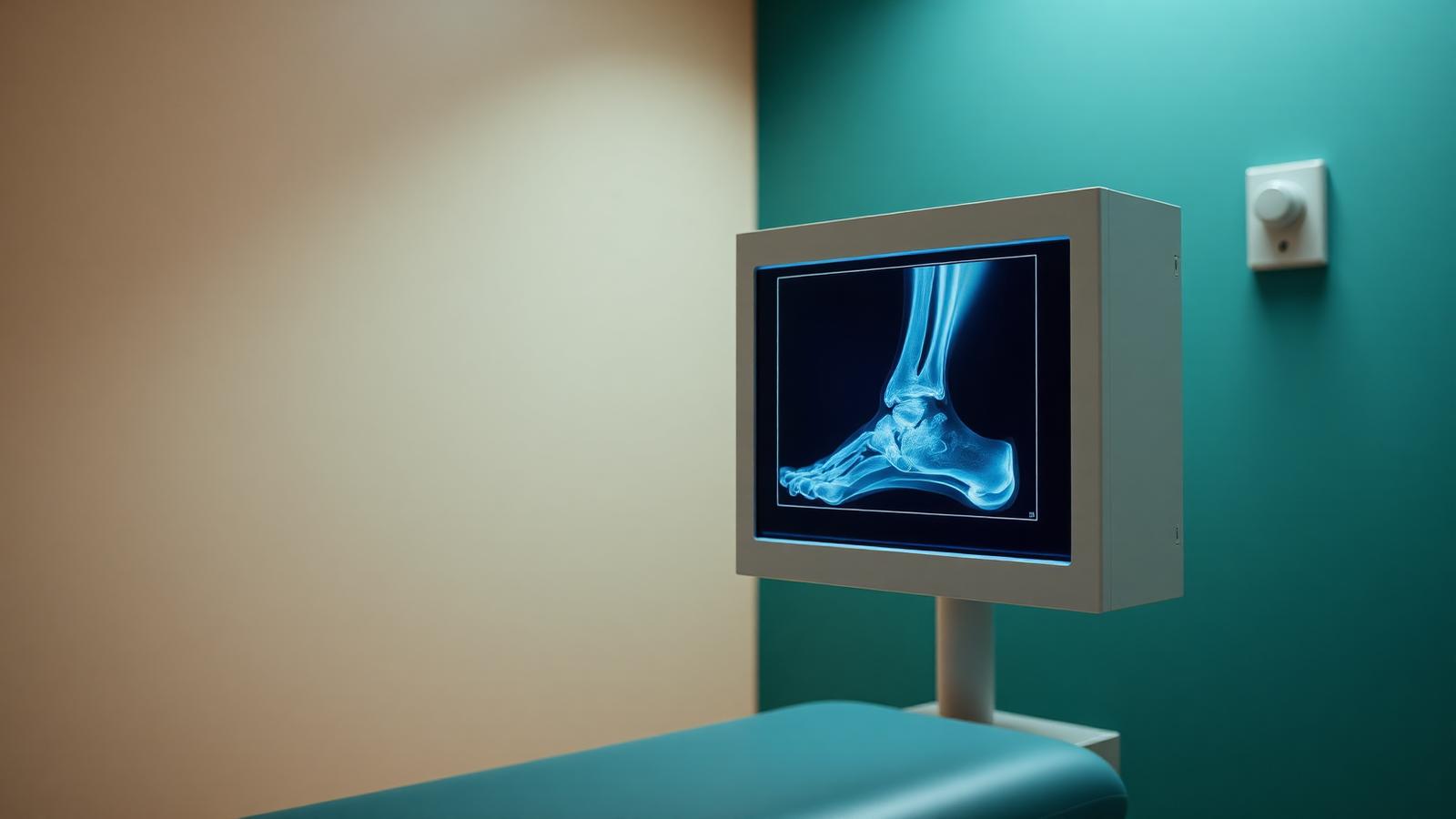
Foot & ankle trauma
A foot or ankle fracture can be frightening and disruptive. Accurate reduction and fixation help avoid stiffness and later arthritis, and where the fracture pattern allows, less invasive techniques are used to protect the soft tissues and get you moving sooner.
What happens
Urgent assessment
Fracture patients are seen promptly, with CT where needed, because timing has a direct effect on the surgical options available.
Fixation
Plates, screws or intramedullary fixation are chosen for the specific pattern, placed through the smallest exposure that allows an accurate reduction.
Correcting old injuries
Malunited or un-united fractures are addressed with corrective osteotomy, bone graft and revision fixation.
FAQ
Common questions about foot & ankle trauma
Other treatments
Keyhole bunion surgery
Minimally invasive chevron and Akin (MICA) correction for hallux valgus, including revision bunion surgery through a keyhole approach.
Minimally invasive forefoot surgery
Lesser toe correction for hammer, mallet and curly toes, metatarsalgia, Morton's neuroma and forefoot reconstruction.
Keyhole ankle surgery
Ankle arthroscopy for impingement, cartilage injuries, OCD lesions and microfracture, with rapid, structured rehabilitation.